


Director Sanjay Rawal Talks Why ‘Food Chains’ is More About People Than Food
A Lawrence Dreyfuss
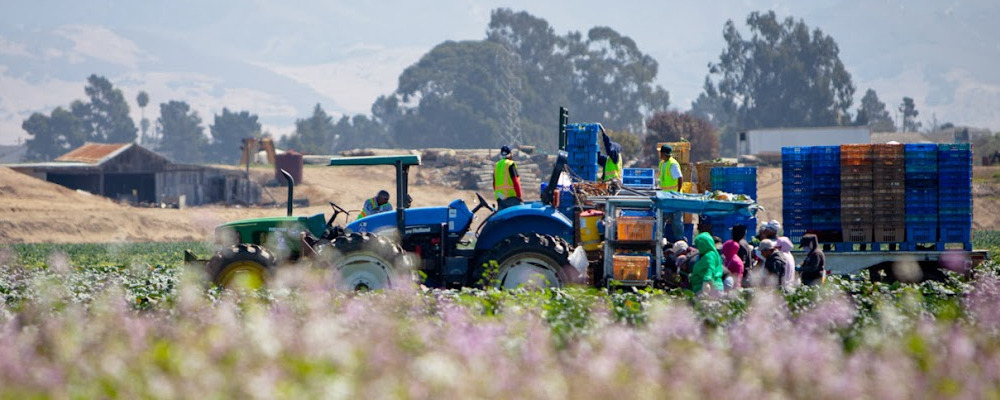
The story of culture cannot be told without the story of food. Who we are is intricately linked to the what we consume. It starts with a seed, planted in a field, nurtured, protected, and then it grows. When it has grown to ideal ripeness, we collect the harvest. Every year, thousands of people around the country pick our fruits and vegetables and yet the vast majority of us do not know who these people are. Underpaid, living in squalor, these people allow us to eat, to prosper. First time director Sanjay Rawal is looking to give a voice to this often neglected section of American society in his new documentary “Food Chains.”
Entertainment Voice: The film does an excellent job of balancing the human stories educating viewers on the issue of marginalized farm laborers. How did you find this balance?
Sanjay Rawal: For anyone making a film about a topic, they should always go to the experts first. We realized quickly when we met people who were the actual farm workers, they were the real experts. We fought the urge to simply go to the people who wrote the books, the articles, finding that the footage we were getting from actual workers was not just more moving but more informative.
EV: The film is based largely around a hunger strike by a group of farm workers in Florida. How did you come to tell this story?
SR: We started filming in 2011 and could not find a book that encompassed the entire issue so we did not have much to guide us except our own eyes and ears. We drove to story. We met advocates on the ground and got the lay of the land. We drove through southern California and the Southwest and ended up in Florida. That’s where we met the CIW (Coalition of Immokalee Workers). The more time we spent with them the more we saw that they have an understanding of the entire U.S. system of farm labor. They understood the supply chain. When we discovered that they were planning on instituting the fast we realized that was the spine of the film.
At first, it was purely academic to us. The passion that they had in protesting large buyers, we did not fully understand that. We knew it came from their history of being abused but when we went to the fast in March of 2012 and saw the vitriol and the hatred that Publix (the company they were protesting against) had toward these workers, that’s when we realized there truly is a villain. It’s not a theoretical villain, it was a good old fashioned corporation that was doing everything in its power to keep these farm workers down. There were a series of surveillance vans camped around where the farm workers were, they were private security hired by Publix. One of the local enforcement officials told me they had never seen the type of surveillance equipment that Public had deployed against CIW. They were deploying this against farm workers who were starving themselves.
EV: In the film, we get to see the families waking up, getting ready for work. What was it like to gain the trust of these workers and work so intimately with them?
SR: It is a very marginalized community. Building trust is difficult. We always reached out to local community leaders first who had relationships with workers. We built trust and they helped us navigate through issues with the workers. One day, we were at a meeting at the CIW’s office. One gentleman tapped us on the shoulder and said ‘you need to come to my house tomorrow morning.’ That’s how much of the film came together. We followed the people that gave us opportunities.
EV: Clearly there is so many stories to tell related to this issue. Were there things that did not make it into the film that you were sad to see go?
SR: The great thing about the digital world is we are able to release a bunch of extras online through iTunes. One such story was in central Florida, areas one of the most racist in the United States where the Ku Klux Klan was once incredibly strong. There were a group of African American farm workers in this area who lived and worked on farms and who were sprayed by pesticides day in and day out. In 1998, the farming area where they worked at, adjacent to Lake Apopka, became so polluted that the state government shut down the farm and the purchased the land. All the workers were then let go. Even worse, five to ten years later they began developing horrific diseases caused by pesticides. They were unable to follow a class action suit because they had no records of which farms were sprayed when, all the evidence you would need.
As a result, this group of black workers went to the governor of the state of Florida and explained that they needed half a million dollars to help the sick displaced workers. The government was already spending millions researching the lake, but they would not give any money to the workers that are tax paying Florida citizens living with terrible health conditions. That story will be released on iTunes.
EV: How much is this a story about food and how much is it about people?
SR: This is a sociological film. When I go to restaurant, I might ask where their pork comes from, where the beef come from but I never ask do they know the farmer who picked the lettuce in the salad. We are not asking that question as a nation of foodies. It’s not a food film. We made the decision not to put in shots of beautiful food. It had to be a movie about human beings. The majority of farm workers have always been ethnic minorities. It is a film about race and inequality in the context of our food system.
EV: Many farm workers in our country are undocumented. Do you think that’s the cause for the mistreatment or do you think that is more of a tangential issue?
SR: It’s true that right now the majority of farm workers are undocumented. That was not the case until the mid nineties. That does not mean they were always treated well. That does not mean that the abuse never existed. The most intense abuses like rape, like modern day slavery, those do not discriminate based on legal status. We have seen many cases of American citizens, multi-generational Americans, getting raped in the field. There was a case in Florida in 2005 in which more than the 200 people were freed from modern day slavery. A large group of those people were Iraqi war veterans of the gulf war. The system preys on poverty. To that effect, the system was always based around the poorest people in America. The first one hundred years of our nation’s history, we brought in farm workers as slaves. The mentality and economics have not changed as much as they should have.
EV: For those who feel moved to do something, what can they do to help?
SR: On our website, www.foodchainsfilm.com, we have a whole section called ‘take action.’ We have many things people can do from signing petitions to joining protests. Around the release of the film, between November 21 and November 28, we are going to have protests in major cities around the country against local retailers that have not joined the fair food program. More importantly, there is an offline component of printing out letters for local stores, going in and talking to managers about these issues and telling them why they should care about the hands that pick out food.
‘Food Chains’ will be in theaters and available on iTunes November 21.