
‘Peaky Blinders: The Immortal Man’ Is a Ferociously Intense Movie Epilogue to the Cult Series
Alci Rengifo
Thomas Shelby as played by Cillian Murphy is one of the great haunted characters of recent television. His story arc is in a sense the arc of a generation that lived through two world wars in the 20th century. This was one reason why “Peaky Blinders,” the cult BBC series introduced to U.S. audiences via Netflix, worked as something beyond another gangster show. Its writing, visual style and performances were already cinematic, so it is a near seamless transition into an actual film with “Peaky Blinders: The Immortal Man.” This is a ferociously good movie that stands on its own while giving fans more of what they love with a needed sense of narrative closure.
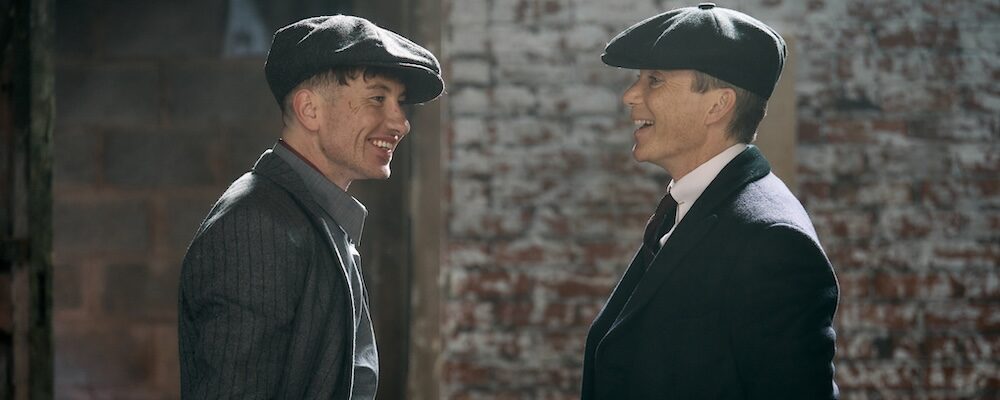
Fans of the show know that each season would jump ahead about two years. “The Immortal Man” opens in 1940, a bit longer than usual to provide a good space from the series finale that dropped in 2022. World War II is raging and as the Nazis bomb the U.K., they are also carrying out a plot involving counterfeit currency. Out in the countryside, Tommy Shelby, World War I veteran and the once powerful head of the Peaky Blinders gang in Birmingham, lives alone, haunted by memories and writing a memoir. Two women appear to try and shake him back into action. His sister, Ada (Sophie Rundle), who is now an M.P., and Kaulo (Rebecca Ferguson), the sister of a past lover. They inform Tommy that his estranged son, Duke (Barry Keoghan), now runs the Peaky Blinders as a true criminal operation taking advantage of the war to steal supplies for their own use. Even darker, Duke is collaborating with a British fascist, John Beckett (Tim Roth), who wants to aid the Nazi effort to flood Britain with counterfeit bank notes.
Steven Knight, who created the original series, writes the screenplay with genuine passion for its world and characters. Along with director Tom Harper, they are not setting out to recycle the greatest hits from favorite episodes. “The Immortal Man” extends the story into richer emotional territory. Even with its punk rock soundtracks and stylish suits, in which the actors would strut in a way that felt infectious, the show would still tackle realistically the nature of the Shelbys’ world. Tommy would constantly endure losses, betrayals and brushes with horror out of building an empire through violence. Still stoic with his graying hair, Tommy returns to Edinburgh to try and make amends, even as he clearly waits for death. The personal and historical collide powerfully. Not only is Duke collaborating with the enemy, but for Tommy there is the deeper anger at his blood dismissing how in being Romani, the rise of Hitler directly threatens their existence. A fight between the two in a pig pen starts framing this as a father and son parable above everything else.
Shot with a hypnotic cinematic scope, “The Immortal Man” is gripping in its texture as well. Harper opens with terrific energy, smashing the mold of the average World War II thriller. Nazis carry luggage with counterfeit money being printed in a concentration camp, capturing the industrial nature of fascism. The soundtrack is less on the nose than the series, yet still features some needle drops that enhance the power of the images, including covers of Massive Attack tracks like “Angel” and “Teardrop” by Antony Genn, Martin Slattery and Carlos O’Connell, who infuse the score with dashes of hard rock and atmosphere. Yet, this is still a more haunted drama than the series, relying less on big twists than on the moral choices facing the characters. Tim Roth’s Beckett doesn’t need an entire backstory or exposition in the dialogue. He exists as so many did and do, as a creation of the times. He is another World War I veteran pulled in by the anger of fascism. In a way he’s a testament to how historians have increasingly started viewing the period encompassing World Wars I and II as a European civil war, or a 20th century version of the Thirty Years’ War. Wartime English society is presented as gritty and unsettling, where saboteurs and spies mingle amid a population unsure of what destruction will befall tomorrow.
For the non-fans, the writing wisely avoids overloading itself with Easter eggs or references to past events. Now that Tommy is mostly alone except for his sister and son (we learn that Charles, his offspring from the romance in season one, is stationed in Africa), there is no need to play catch up with endless names. The devotee’s heart will of course feel tugged when Polly (the late Helen McCrory) is mentioned. We also learn the surprisingly tragic fate of Arthur (Paul Anderson), the hotheaded Shelby who could never surpass his demons. Enough is said to frame this as the story of a man who rose high and is now on his own. Maybe Tommy can repair some of what’s left of his legacy, and there’s no better way than sacrificing himself to stop a great evil. Cillian Murphy, who has been making many sharp, arthouse choices since winning the Oscar for “Oppenheimer,” plays the role to haunted perfection while Barry Keoghan is a feral younger man feeling abandoned and so unloyal to everything. “The Immortal Man” rises to the level of real cinema pulled from smaller TV origins, fit for a year when, like the Shelbys, we find ourselves coping with a world turning into rubble.
“Peaky Blinders: The Immortal Man” begins streaming March 20 on Netflix.