
Don Cheadle and Co-Star Emayatzy Corinealdi Talk Creativity and Miles Davis Biopic ‘Miles Ahead’
Sandra Miska
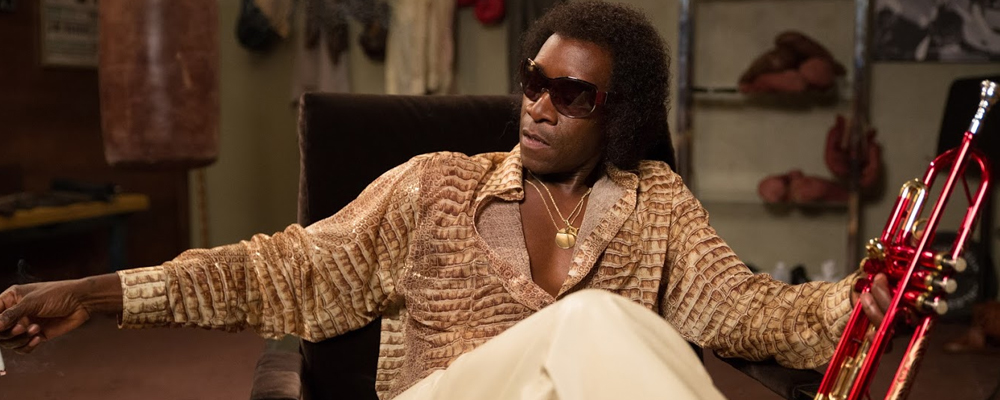
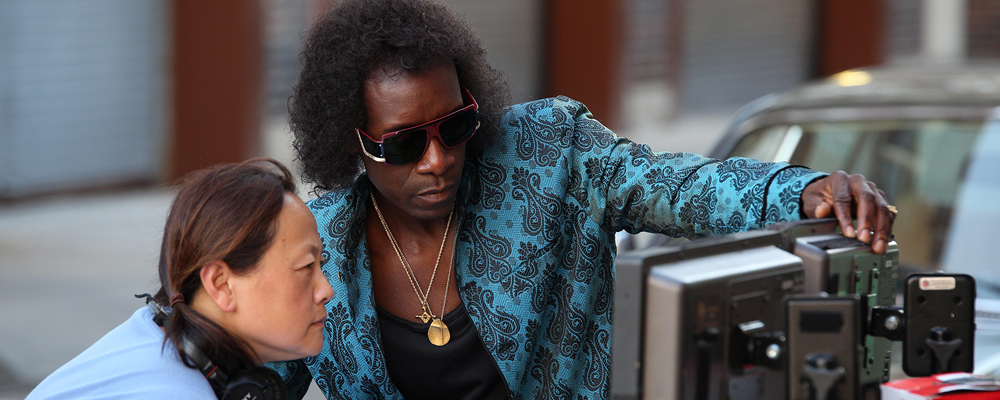
Although Don Cheadle, who was nominated for an Oscar for “Hotel Rwanda” and won a Golden Globe for his portrayal of Sammy Davis, Jr. in the TV movie “The Rat Pack,” is hardly a novice when it comes to biopics, “Miles Ahead” is quite the game changer for the “House of Lies” star. Not only did he transform himself physically to play legendary jazz trumpeter Miles Davis, but he also put on many hats for the first time to make his directorial feature debut. Cheadle recently opened up to Entertainment Voice about this extraordinary film that he worked tirelessly for 10 years to get made. He spoke candidly about this challenging journey in creating a unique biopic about a man whose music he listened to before he could even walk or talk. Joining him was his co-star Emayatzy Corinealdi who wows as Davis’ first wife Frances Taylor.
Cheadle co-wrote the screenplay with Steven Baigelman and knew from the start that he didn’t want to make a traditional biopic. “We wanted to have a movie that felt like the energy of creativity and felt like a composition as opposed to being something that was didactic or instructional or [something that] tried to click off all the highlights or lowlights of one entertainer’s life,” he said of the screenplay, which focuses on two pivotal chapters in Davis’ life. “It’s been an amazing road. It is surreal, gratifying and surreal, that we’re here.”
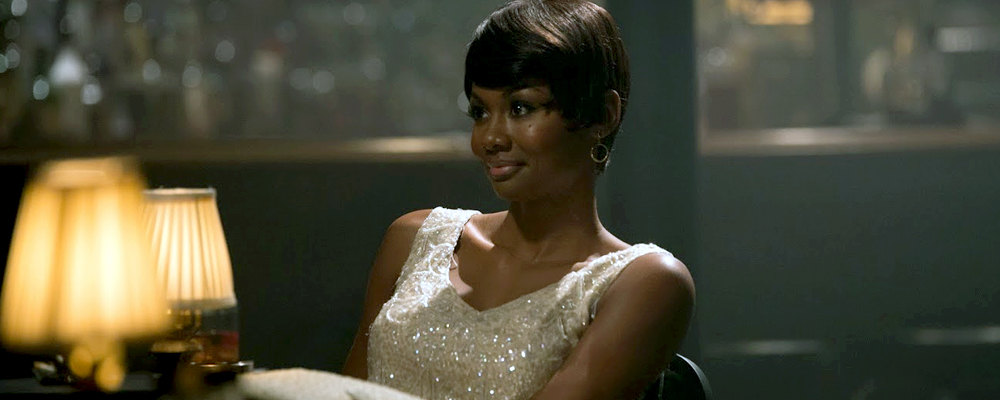
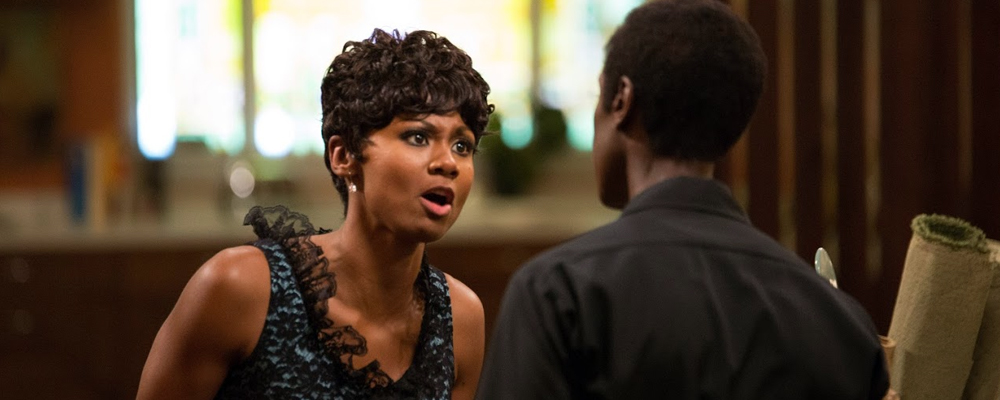
Corinealdi came onboard the project two years ago. The film had been on her radar for a long time before she signed on to play Frances. “It was in the back of my mind. When it actually came to be I was extremely excited. Don, for me, is just one of those actors I always wanted to work with and to have him directing me was a wonderful opportunity for me to stretch and to have my game upped by working with him.”
If things had gone how Cheadle had originally planned, Corinealdi and the rest of the cast may have been deprived of the experience of being directed by him. “There was no part of it where fear wasn’t in the sidecar,” Cheadle said of his process in making “Miles Ahead” for which he composed music and learned the trumpet, in addition to acting, directing, writing and producing. “Any one of those things by themselves would, for someone like me, be fear-inducing. …I tried to give this away several years ago. I tried to hire another director so that I could not be afraid of that responsibility and just focus on the other important things that I was going to do but that didn’t come to pass. Everybody I interviewed and met with and read the script said, ‘This is your vision. You have to see this through to the end. That’s your journey.'”
“The thing that really struck me most about Frances was her courage,” said Corinealdi of Taylor who was not only her husband’s muse but also a successful ballet dancer. “It took courage to, as a black woman at that time, embark on the kind of career that she had for herself. That just wasn’t something that came easy or happened often. It took her a certain amount of courage to believe that she could do it. And then it took courage to love in the way that she did; to sacrifice in that way no matter what she thought would come of that . . . . When we love someone fully, it’s scary. She did that.”
“Miles Ahead” focuses on a period in Davis’ career during which he is on the verge of making what many would call a comeback. Cheadle spoke about the challenge he and Baigelman had when creating a screenplay about a man whose career and life were as rich as Davis’ were. “The first title of the movie, the working title was ‘Kill the Trumpet Player: Volume 1’ because we always thought, ‘Wouldn’t it be great if we do like five Miles Davis movies? If we just focus on this, now we can do an origins movie; now we can do a when he came out of this period movie; we can do the near his death movie; we can do five different Miles Davis movies, and they would all be different and interesting and valuable.’”
But we focused on this particular period of time because it felt very meta for Miles. One of Miles’ biggest dictums that I guess he lived by was ‘play what’s not real’ and it felt like kind of a down note before this up note, and we wanted to look at the down note before the up note and create a way, a narrative that would allow us to externalize an internal process not just show an artist just sitting at a piano or playing a note and writing something down in a journal over their shoulder.
To prepare for her ballet scenes, Corinealdi had help from a certain boy band member and his spouse. “For me, it was working with the choreographers, which were Drew Lachey and his wife [Lea] in Cincinnati,” she explained. “They got me prepared. They got me in the best ballerina shape that they could. For me, it was very important because Frances was a prima ballerina, and I had not had a ballet class. It was something my mom had always wanted me to do so a part of it was, for me, wanting to fulfill that dream for her. So I wanted to just be good for both of those reasons. They really just whipped me into shape in the couple of weeks that we had to rehearse so that was a large part of me preparing for the dance portion.”
Cheadle himself went the extra mile to do right by Miles and the audience by learning how to play the trumpet. “For me, playing the trumpet, learning how to play the trumpet, I talked to a couple of people since then and said I learned how to play for this and they said, ‘Why? Nobody knows. You could’ve just [pretended] and everyone would’ve thought you did it.’ And I said, ‘But I would know. And trumpet players would know.’ I always want to get the people who are really doing the thing to buy in because I know if I get them then I can get everybody else. And even beyond that I wasn’t about to fool anyone. It was about me wanting to have an understanding of what that study was about and what playing trumpet meant; what the breath was like; what that commitment is like. It’s unlike any instrument. It’s a very punishing instrument. It’s very unforgiving if you don’t play for [a while]. I was debating whether to grab it this morning. I literally walked back into my house. I walked back and I looked at it. I walked back and I was like, ‘I’m sorry, I have to go.’ It’s something that’s stuck. I really love it, but I wanted to understand from the inside out what that study was about and what that commitment was about. I needed to learn those solos even though we weren’t going to use my sound. We used Miles’ sound.”
“Miles Ahead” opens April 1 in Los Angeles and New York, April 22 nationwide.