
‘DTF St. Louis’: Jason Bateman, David Harbour and Linda Cardellini Form a Love Triangle Tethered by Suburban Frustration and Desire
Alci Rengifo
You can never tell what might draw a particular group of people together. Sometimes it can be sheer boredom, more often than not it’s because of loneliness. HBO’s “DTF St. Louis” starts off as a murder mystery linked to some kinky activities between, naturally, suburbanites. The title itself is a tease, referencing that famous direct term, “down to fuck,” and the name of a dating app in the show. Showrunner Steven Conrad isn’t out to make a commentary on apps and modern dating norms. What he has crafted is an addictive murder mystery about people who end up in a love triangle out of offbeat, quirky, emotionally arcane reasons. Some of the wildest decisions in love tend to spring out of the most simple wants.
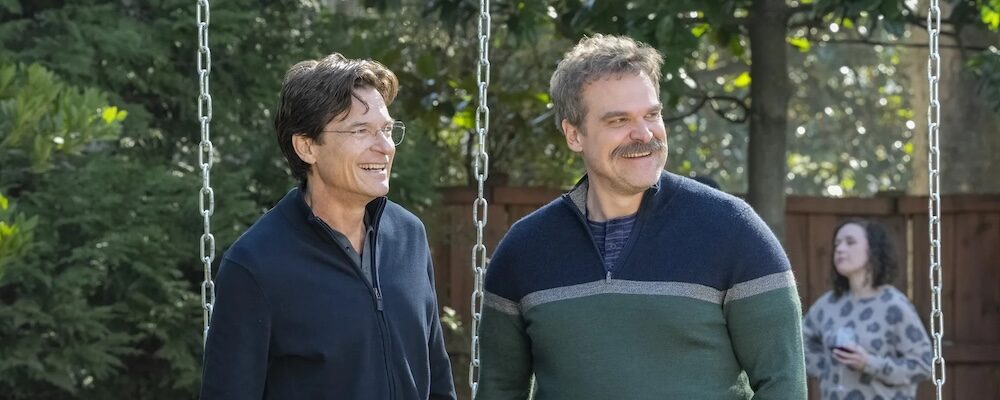
As the title states, the story is set in St. Louis. Clark Forrest (Jason Bateman) is a recumbent bike-riding local weatherman who befriends Floyd (David Harbour), his station’s ASL translator, while covering a vicious storm. While Clark is a fit, middle-aged bachelor, Floyd is self-conscious about his weight gain and lack of sexual spark with wife Carol (Linda Cardellini). It hasn’t helped that Carol has been working as an umpire to make extra money to send her son, Richard (Arlan Ruf), to a private school. Her uniform is decidedly unsexy. One day Clark brings to Floyd’s attention an app, “DTF St. Louis,” which is designed for married people who want to get sexually adventurous with strangers. Despite being skeptical at first, Floyd eventually agrees to tag along with Clark in trying it out. Cut to a few months later and Floyd is dead at a local swimming pool. Detective Donoghue Homer (Richard Jenkins) and a special crimes officer named Jodie Plumb (Joy Sunday) arrive at the scene and start piecing together what led to this apparent tragedy.
As a creator Conrad’s work has never been your basic TV offerings. His titles include “Patriot,” “Ultra City Smiths” and “Perpetual Grace,” shows that play with genre and form, going so far as to use puppetry. “DTF St. Louis” never gets experimental. What it does differently is set up a kind of suburban noir that gradually builds around the actions of its characters as opposed to turning into a high tension thriller. In the first episode we learn Floyd told Clark he knew the latter was sleeping with Carol before turning up dead. Typically, the narrative might then becoming increasingly ominous. Instead, when turning the clock back in the narrative, it grows into a melancholy portrait of middle class middle-aged life. Some of it is reminiscent of less successful HBO shows like “Here and Now,” where mundane life struggles are meant to convey something about who we are in this moment of time. Floyd is constantly tortured by wanting to slim down his growing gut, while suffering from a dead libido due to Peyronie’s disease mixed with Carol not looking good in her umpire gear. Clark starts entering a danger zone by getting on a swing in his backyard to stare at Carol across the fence.
Like an anthropologist, the show’s camera focuses on how an affair can begin in the simplest ways. Clark wants Carol and by chance bumps into her at a Jamba Juice, striking a friendship where she soon reveals quite a bit about her own problems with Floyd. When they meet at a hotel later on, their trysts are rather comic, since they don’t consist of traditional TV sex, but Clark wanting the simple pleasure of Carol sitting on his face while she does regular tasks like taking phone calls. The weatherman’s own bond with Floyd then operates in the background, becoming rather endearing at times. Clark gets defensive over the cops’ questions regarding his friend, including the adult magazines found next to his body. When Floyd tries to explore new avenues when his only match on DTF St. Louis is another man (Peter Sarsgaard), not only is Clark supportive, but we get the hint it might have led to a more intimate physical moment between the buddies. Keen followers of pop culture will also wonder if Harbour agreed to this role as a form of catharsis following ex-wife Lily Allen dropping an album in October exploring her failed marriage to the actor, including his infidelities on the dating app Raya.
Other headaches of suburbia also work well despite feeling familiar. Floyd is depressed, but he tries to genuinely bond with Richard, a teen suffering from being a loner at school. They have one conversation in particular, where Floyd manages to impress the kid with a gymnastics routine he’s been doing since childhood that gets corny in the right way. “DTF St. Louis” is about such scenes, even more than the roaming detectives and an emerging plot thread about a life insurance policy. These characters face their fears about life by breaking the rules behind closed doors, or indulging in their hobbies and scheming dark thoughts. No one in this show is “evil,” just bored or terrified of credit card bills that never stop arriving in the mail. This is a compulsively watchable portrait of your average suburbanites doing naughty things because staying bland feels like death.
“DTF St. Louis” premieres March 1 and airs Sundays at 9 p.m. ET on HBO.