
‘The Mandalorian and Grogu’: Jon Favreau Expands His ‘Star Wars’ Series Into a Barely Serviceable Feature
Alci Rengifo
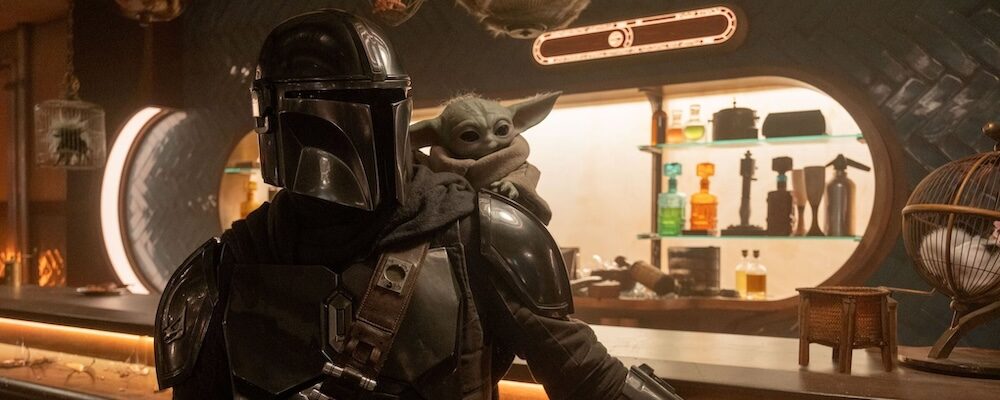
When Disney bought Lucasfilm and became owner of the “Star Wars” franchise, something fundamentally changed. In hindsight, it is easier to see now how difficult it is to capture the magic that made the original films such pop cultural landmarks. Even George Lucas’ prequel trilogy has aged just a little better in comparison to the slew of shows and films produced by the house of the mouse. A shining spot has remained the first season of “The Mandalorian,” the first major “Star Wars” series that premiered when Disney+ first opened for business. Creator Jon Favreau made a heartfelt serial with an engaging new pair of characters in bounty hunter Din Djarin aka Mando (Pedro Pascal) and Grogu, the child under his protection belonging to Yoda’s green species. Seven years after the series premiered, we get “The Mandalorian and Grogu,” a technically skilled movie that also feels like three episodes of the series glued together.
Favreau directs this new adventure where Mando (Pascal) is going around the galaxy hunting down old agents and officials of the now deposed Empire. The New Republic pays him to snatch these fascists on the run, with Grogu at his side. Colonel Ward (Sigourney Weaver) calls in the armored adventurer with a new job. A pair of twin Hutt crime lords are asking for help to track down their kidnapped nephew, Rotta the Hutt (Jeremy Allen White), who turns out to be the offspring of the dreaded Jabba from “Return of the Jedi.” In return, they will provide information on a major Imperial fugitive. Off go Mando and cute Grogu (still with the habit of touching all the buttons in Mando’s ship) to track down Rotta. They find the Hutt on the planet Shakari, where he is being used as a gladiator by another crime boss, Lord Janu (Jonny Coyne). But when Mando approaches Rotta, the latter tells him he likes being an acclaimed fighter. He just needs to do one more fight to pay off his debt to Lord Janu and be free. It won’t be so easy to just walk away, because Mando made a deal with the Hutt Twins and Rotta has surprising information on the Imperial official being sought by the New Republic.
Ever since directing “Iron Man” in 2008 and kicking off the MCU’s golden age, Jon Favreau has been a big budget director (with the exception of “Chef”). The pitfall is that you can easily become a talented factory product machine. “The Mandalorian and Grogu” feels like a visually large piece of pure product. The screenplay by Favreau, Dave Filoni and Noah Kloor stitches together some of the basic ingredients of the show and goes no further. As a series, Mando and Grogu were fun to follow because they were almost Western archetypes, like the gunslinger and his kid sidekick, going from one adventure to another in brisk episodes that rarely went over 40 minutes. At heart it worked as a parable about parenthood and being responsible for another life. The best parts of the film are the heartwarming scenes involving Grogu and Mando depending on each other, with the elder teaching the child how to survive in a dangerous world. There is genuine fear in an early scene where the two walk into the Hutt Twins’ stony fortress, where strange creatures hide in the shadows and other Hutts slither by. In such moments, Mando gives Grogu little life lessons about how this particular society operates and why they should watch their backs.
Visually the film certainly has scale (despite only taking place in about two worlds) and Favreau’s team fill the screen with small and big details. Shakari is a neon city that seems inspired by “Blade Runner,” with a pit where Rutta fights opponents that looked borrowed from a galactic version of “Spartacus.” The Hutt planet is a humid jungle with critters everywhere. The score by Ludwig Göransson has sweeping moments with a grander version of the “Mandalorian” theme. So why does the film still feel like it does not quite reach the level of a good “Star Wars” entry? For one thing, the story lacks a cohesive structure. One moment it’s a cheery “Star Wars” romp and then it wants to be a noir before ending on a very long third section involving Mando and Grogu being trapped on the Hutt world. Gone is the truly mythical, fairy tale spirit of the original films or concept. Yet, divided into sections these would have been fine as episodes of the show. Favreau knows how to shoot action and avoids the fan service name-dropping of J.J. Abrams’ movies, especially the much discarded “The Rise of Skywalker.” It is strange, however, how much of the movie operates on individual scenes that work well punctuated by material that doesn’t add up to much.
Grogu, known popularly as Baby Yoda, may be a total Disney ploy to sell plushies and inspire awes in theaters, but there is little denying that without him this movie would be nothing but Mando walking around with his one-liners. The script doesn’t bother to provide the backstories of the pair for those who have not seen the series, and maybe it doesn’t have to. The puppetry and CGI work make for some genuinely entertaining, endearing moments like Grogu having to find a way to help Mando when injured, wandering a dangerous jungle, even stealing cooked fish from a local, then gurgling like a baby and playing by the sea with Rotta. Grogu only uses the Force a few times, as if the filmmakers suddenly remembered this is still “Star Wars.” Jeremy Allen White is barely noticeable as Rotta, even if the big slug is given a storyline with some thought on how the heir to Jabba deals with dad’s legacy. As for any cameos, Martin Scorsese voices a street vendor on Shakari, meaning only the most diehard film buffs in the audience will realize it’s him.
If there is a sequel, the next “The Mandalorian and Grogu” adventure should feel unconstrained by the big screen and aim higher. So much money is splashed on the canvas and yet we feel even the director’s heart isn’t fully into the undertaking. Next year “Star Wars” turns 50 years old. For half a century this has been one of the dominant pop cultural franchises. Those of us old enough to remember the release of “The Phantom Menace” recall the excitement because the idea of a new “Star Wars” film was beyond rare at a time when not everything became endlessly recycled into sequels, remakes and spinoffs. The magic has been diluted by overkill. There are some good things in this movie and impressive work in the effects department, what they needed was to strive for a story truly worthy of the most ardent believers in the Force.
“The Mandalorian and Grogu” releases May 22 in theaters nationwide.