
‘Nocturne’: Stephen Graham Masters the Mind of a Killer in Psychologically Unnerving Lars Kepler Adaptation
Alci Rengifo
The best crime stories are really about people. The mysteries that haunt us tend to reveal something about the darkness of human nature, particularly the ability to manipulate others through their deepest fears. “Nocturne,” Apple TV’s first adaptation of the novels by Swedish thriller-writing duo Lars Kepler, understands this well. Its story of a notorious serial killer, a missing child and an investigation that refuses to stay buried is familiar territory for the genre. Yet the series finds considerable tension in the psychological wounds left behind by violence. Like a sinister game of chess, its characters are constantly anticipating the next move, never entirely certain who is pulling the strings.
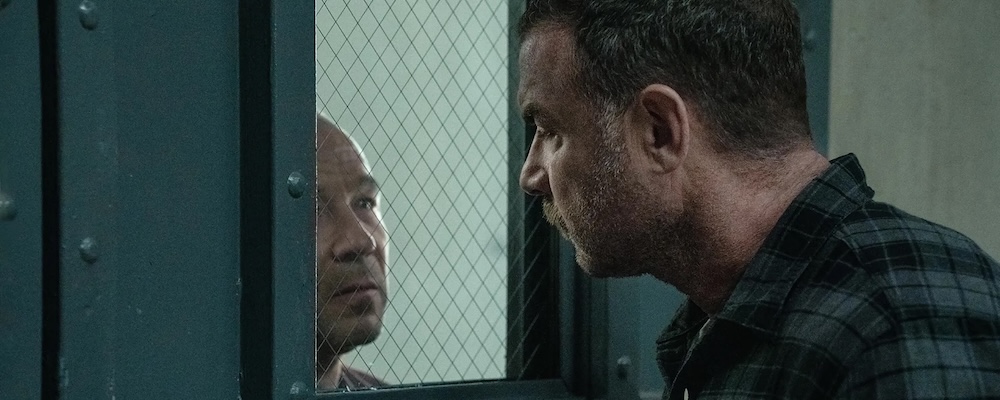
The central figure behind this nightmare is Jurek Walter (Stephen Graham), an imprisoned serial killer whose talent for psychological manipulation makes him terrifying even behind institutional walls. Walter has an almost supernatural ability to persuade others to commit horrific acts, a gift that becomes apparent when he influences another patient to take his own life. The arrival of Karl (Rory Culkin), a new nurse at the psychiatric facility, offers Walter another opportunity to extend his reach beyond his cell. The man’s physical confinement means little when his mind remains free to infiltrate those around him. Outside the hospital, a child who disappeared years earlier suddenly reappears on a Pennsylvania bridge. His return raises disturbing questions about his abduction and the fate of his sister, who vanished alongside him. The children were believed to have fallen victim to Walter, but how could one have survived while the killer was imprisoned? And what happened to the girl? These questions bring detective Jonah Lynn (Liev Schreiber) back to a case that has haunted him for years. Working with federal agent Quinn (Poorna Jagannathan) and his friend, local police chief Ellison (Bill Camp), Lynn must confront the possibility that Walter had an accomplice. Their investigation becomes a race against time, as the truth about the missing children grows more elusive with every new discovery.
The most intriguing element of “Nocturne,” however, is Saga Bauer (Zazie Beetz), who goes undercover inside the psychiatric institution to get close to Walter. Her assignment requires more than conventional investigative skills. She must enter the mind of a man whose greatest weapon is his ability to understand and exploit the vulnerabilities of others. The closer she gets, the more dangerous the investigation becomes. Under the direction of television veteran Tim Van Patten, the series establishes an atmosphere of quiet menace. The institution is not merely a setting for criminal interrogation but a place where the boundaries between psychological confinement and physical freedom become increasingly blurred. Walter’s presence hangs over the proceedings even when he is not on screen. The suspense comes less from what he does than from what he might convince someone else to do.
There are obvious echoes of “The Silence of the Lambs,” particularly in the relationship between an ambitious investigator and an imprisoned killer who possesses extraordinary psychological insight. The series also recalls the bleak regional atmosphere of “Mare of Easttown,” with its Pennsylvania setting and characters whose lives seem shaped by inherited grief. These comparisons are difficult to avoid, but the performances give “Nocturne” enough personality to establish its own identity. Schreiber delivers particularly affecting work as Lynn, a detective whose professional instincts are complicated by personal trauma. Rather than relying on the forceful charisma that has defined some of his previous roles, he conveys a man worn down by the past, almost reluctant to revisit the case that continues to torment him. Beetz brings intelligence and controlled intensity to Saga, while Camp and Jagannathan provide reassuring solidity amid the growing uncertainty. Culkin is suitably unsettling as Karl, and Graham makes Walter frightening without resorting to theatrical excess. His quietness is more disturbing than any display of menace.
The series occasionally pauses for exposition, but its brisk pacing and sharp dialogue generally keep the investigation moving. Its greatest strength is the way it treats violence as something that extends beyond the immediate crime. Families are left to reconstruct their lives around unanswered questions, while investigators carry the burden of decisions that cannot be undone. The returned child’s mother (Chrissy Metz), struggling to comprehend her son’s reappearance, represents the emotional cost of a mystery that no police investigation can easily resolve. There is, however, a significant caveat. Apple TV+ made only the first seven episodes available for review, withholding the final three. Consequently, the series’ ability to bring its numerous mysteries to a satisfying conclusion remains uncertain. A thriller built on psychological games must ultimately deliver more than an accumulation of twists.
Still, the episodes available establish an absorbing world where the most dangerous monsters are not necessarily those behind locked doors. “Nocturne” understands that fear thrives in uncertainty, and that the past can become a prison even when its victims are technically free. Whether the series ultimately solves every mystery is another question. For now, its greatest accomplishment is making us wonder how much darkness can be contained within a human mind.
“Nocturne” season one begins streaming Oct. 30 with new episodes premiering Fridays on Apple TV.