
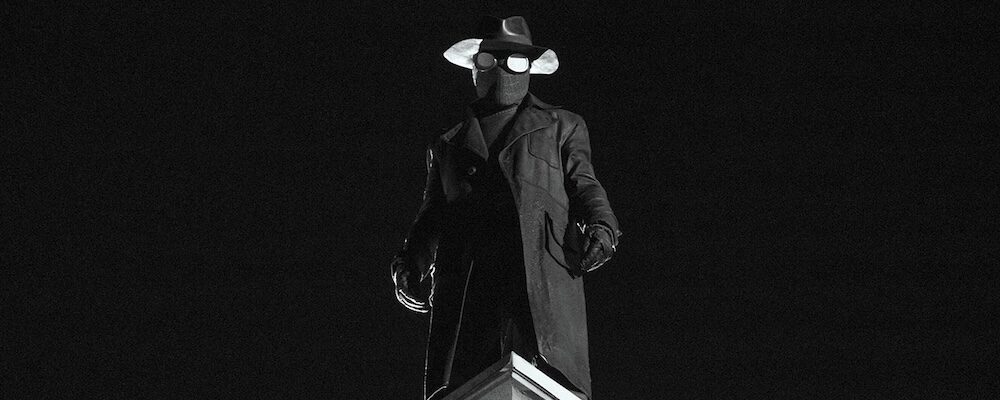
Nicolas Cage Spins a Detective Story Into Superhero Origins in Stylish ‘Spider-Noir’
Tony Sokol
Prime Video’s “Spider-Noir” spins a tangled web. The eight-part series reimagines the urban superhero story through the lens of a 1940s private detective film with a mix of cynical whimsy and slapstick nihilism, with a snappy center. Nicolas Cage throws himself into a physically demented and vocally acrobatic performance as a jaded private gumshoe escaping the responsibility of heroic renown, a painful loss, and monstrous secrets.
In the 2018 animated film “Spider-Man: Into the Spiderverse,” Cage voiced the traditional Peter Parker character. “Spider-Noir” is an adaptation of the 2009 comic book. Peter Parker hasn’t been born yet. In the series, Cage plays Ben Reilly, formerly known as The Spider. Now he trails cheating wives for $10 a day, plus expenses.
Cage spins the usual noir detective tropes out of the well-worn clichés of popular crime novels, but isn’t above dipping into pulp fiction. Ben Reilly has more in common with Mickey Spillane’s shortcuts than Raymond Chandler or Dashiell Hammett’s professionalism. Humphrey Bogart’s iconic Sam Spade puts his feet up in a nice office in “Maltese Falcon.” Ben is down on his luck, barely able to pay his secretary, Janet (Karen Rodriguez), and nursing old wounds with cheap bourbon.
Ben is initially hired to track a man named Addison, who ultimately turns into a human torch. Addison makes fast money as an arsonist, sets fire to the home of a powerful gangster, Silvermane (Brendan Gleeson), and is killed by another private detective while Ben watches at a distance. It steadily becomes clear there are more men with hidden abilities. But it builds too quickly to register as a shock, or add suspense. It is a predictable inevitability.
Robbie Robertson plays the freelance reporter, Lamont Morris, Morris’s confidante, as the perfect comic book newsman, as a Jiminy Cricket He’s a little too moral, but makes it work. Morris connects in the room with a knowing wink, bringing an easy feel to the dialogue, as opposed to the stylized performances of the other actors.
Cage captures all the mannerisms of the era’s prototype. He is hard-boiled with a soft center. Cage uses all his voices, liberally borrowing from several different Bogart performances, and even capturing the unmistakable out-of-the-side-of-the-mouth sneer of Edward G. Robinson. The motivation is internalized as Ben recites every, obviously beloved, word James Cagney says in “Great Guy” as if he’s teaching himself to speak. Cage is often brilliantly impulsive, but occasionally slides into tacky impressions.
Though he’s made of sand, Jack Huston brings a strong enough foundation to Flint Marko to build the strongest, and most emotionally affecting, arc. In spite of the choice he makes, the audience cares about Sandman. Andrew Lewis Caldwell’s Dirk Leydon, aka Megawatt, lights up the screen, stealing any scene he is in with a self-aware flourish, a surprising grace, and the charisma of a union organizer on the take. Megawatt quotes Shakespeare and truly expects applause, because street performances are electrifying. Abraham Popoola’s Lonnie Lincoln, also known as Tombstone, is the grounding force of the former POWs who’d undergone experimentation. The unraveling conspiracy ultimately leads to Ben’s origin, as all the men with superpowers who were in the camp were liberated by his platoon.
In spite of all the wanton carnage, Silvermane comes across as too nice to be a mob boss, but Gleeson brings humor and personal pain to the unfortunate cost business of violence. The formerly impoverished Irish immigrant is ruthless, but Gleeson maintains a quiet presence, uttering relaxing threats with offhanded menace. The implied threat of domestic violence, both mentally and physically, rips any good will from the character.
As a femme fatale, Cat Hardy (Li Jun Li), works best onstage. When Cat sings “Dream a Little Dream of Me,” it appears she is instilling herself into Ben’s dreams. During seduction scenes, however, the chemistry is disconcerting. Ben’s age difference with the femme fatale is a little creepy, especially as any details to explain this are glossed over. Ben’s fiancée died in an accident five years before the series is set, and he blames himself. While this is instrumental in explaining the protective connection with Cat Hardy, more should have been offered on the relationship than an excuse for a comeback. Cat offers an excuse to listen. But inflicts an almost irrevocable self-wound.
“Spider-Noir” doesn’t skimp on action. There are plenty of well-shot, though slightly cartoonish, superhero fight scenes, as well as chases, and generally frightening collateral damage. Sequences featuring the many uses of The Spider’s webbed transportation swerve between impressive, and comic.
There are two viewing options for each episode: “Authentic Black and White,” or “True Hue Full Color.” The series was filmed in black and white and digitally colorized. The color episodes are vibrant, showcasing the production sets, and period wardrobe. The original black and white cinematography brings life to the shadows, reflecting the post-war film noir’s look but only mirroring the psychological depth of stylistic intent. O In spite of the meticulous study of the timing of shadows and fog, “Spider Noir” doesn’t confront the darkness head on.
“Spider-Noir” maintains suspense and mystery, especially during the first few episodes as characters, clues, and twists unfold effortlessly. The story isn’t particularly innovative. The narrative follows the basic formula, with surprises occurring in unexpected sequences. While most noir films were over-plotted, “Spider-Noir” keeps it simple. Confident execution keeps the pace fast, letting the wit go by so quickly, good lines and cornball collide without distraction. It runs fast, and stays sharp.
“Spider-Noir” streams May 27 on Prime Video.