
‘Tenzing’: Tom Hiddleston and Genden Phuntsok Ascend Everest in Unsung Sherpa Tribute
Tony Sokol
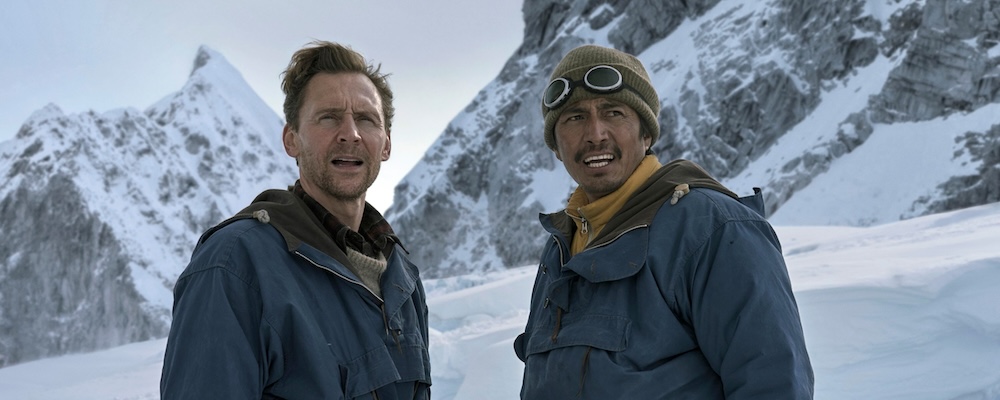
The first successful summit of Mount Everest in 1953 remains a touchstone in human achievement. History focuses on the New Zealand explorer Edmund Hillary (Tom Hiddleston), who took the official first step. But the peak accomplishment was an equal partnership with Tenzing Norgay (Genden Phuntsok), who reverently kneeled on the summit of the world’s tallest mountain a moment later. “Tenzing” is the feature premiere for Australian director Jennifer Peedom, whose documentary films include “Sherpa” and “Mountain.” It is an arduously informed account of dedicated collaborators with separate dreams.
“Tenzing” opens when a very young yak-herder, Tenzing (Samdrum Dorje), wanders into explorer George Mallory’s (Johnny Flynn) camp, and tries on heavy oversized snow-boots. The cordial exchange occurs just before the adventurer’s fatal attempt to be the first climber to reach the top of Mount Everest in 1924. This chance meeting, along with an early family disaster leaving the young boy in a monastery, transform childhood idolatry into a lifelong passion.
Because Tenzing was born in the Tibetan Plateau, he is not an ethnic Sherpa, and considered an outsider in the Himalayan community where he is forced by illness to grow up. As a hard-working young man of the lower class, Tenzing (Tenzin Dalhi) wants to marry his boss’s daughter Dawa (Thinley Lhamo), who supports his fascination with climbing Chomolungma, which means “Mother Goddess of the World” in Tibetan and Sherpa culture. The father respects Tenzing’s ambitions, reminds him of class, and tells him to get back to farmwork.
Newly married, Tenzing relocates to Darjeeling in hopes of getting a job guiding European expeditions up Chomolungma. Through confidence, last-minute cramming, and an irresistibly hysterical grammatical error, Tenzing gets assignments. As his daughters are born, Tenzing reaches a milestone, working in a European attempt which failed because of a monsoon. Because of this reputation, Tenzing later receives a request to join a British team assembled by expedition secretary Jill Henderson (Caitríona Balfe).
The team leader is Colonel John Hunt (Willem Dafoe). As a condition of organizing and leading the Sherpa group, Tenzing insists on being an official member of the climbing team, not relegated to support staff. Because Tenzing is the only person ever to reach 28,000 feet high on the 29,031 feet mountain, he is granted membership into the elite unit if still an outsider. While accepting the demands, Colonel Hunt informs Tenzing of yet another social pecking order: the English one. This nationalistic demerit system extends to Edmund Hillary (Tom Hiddleston), a loner who is referred to as a “Kiwi” by the all-British expedition heads.
Classism and prejudice resurface unequally from both sides. Tenzing is invited to sleep in the heated hunting lodge rented by the elite sporting adventurers, but opts to spend the night in a shed with the other Sherpas, who eye him with deeper suspicions. Used by the arrogant British adventurers, they know support staff means being treated as servant class lackeys, and question which side Tenzing is on. Phuntsok hangs the pain of enforced ambiguity on the deeper wounds of secretly mourning his wife, and missing his daughters. Tenzing’s promises to his family become entangled with the offerings he makes to the goddess of the mountain.
Tenzing and John look at Everest in completely different ways. The military commander sees an enemy to conquer. The Sherpa see a terrifying sacred force being wounded. The eternal outsider sees a mother hiding a cradle. He calls it “my mountain.” Tenzin admits wanting to climb on Chomolungma’s shoulders and whisper in her ear, to a near-mutinous Sherpa guide. John wants to plant a flag and claim national honor. The mountain is ultimately served best.
All three actors who play Norgay in the different points of life present unified determination mixed with a deep humility. Hiddleston excels as a supporting character, generously supporting Norgay’s lead as Tenzing guides Hillary. The joined journey expands the focus beyond any number of feet left to climb. In Hiddleston’s hands, Hillary’s trust in Norgay’s knowledge is believable. He trusts what he sees, and lets us feel it. Hiddleston mirrors Phuntsok. Dafoe unsurprisingly presents a multilayered take on a staid and proper soldier in charge of an important mission. The Colonel is steadfastly bent on rules, yet unbent by reality. His glee in another’s triumph also translates universally.
The true star is Chomolungma. The immobile mass of earth and snow gives a particularly moving performance. The terrifying grandeur is thrillingly and excruciatingly captured by cinematographer Stefan Duscio. The mountain’s beauty, scale, and unexpected dangers frame every scene, while the sound of the perilous conditions pound against closed tents when it is hidden.
“Tenzing” succeeds in depicting a realistically harsh environment, with exceptionally effective jeopardy, uncertainty, and suspense, even though we know how history will play out. Every landscape holds a trap. For those looking for nonstop adventure, “Tenzing” is a tough hill to climb. The climbers face snowdrifts, cliffs, thin air, and oxygen tanks with frozen masks at almost every turn. Horrifying weather, atmospheric illness, unsettling avalanches, and unexpected crevasses force consistent adjustments. But the overall journey is leisurely paced. Traveling through such terrain is painstaking.
Co-writers Peedom and Luke Davies set the mood slowly, presenting a meditation on changing motivations, rather than merely a testament to human spirit. “Tenzing” presents an uplifting true story celebrating freedom among the elements. But the film is also a biopic which paints a heroic portrait of a historical footnote by the numbers.
“Tenzing” releases Oct. 9 in select theaters and begins streaming Oct. 16 on Apple TV.