




Inspiring Jesse Owens Biopic Confronts Historical Racial and Political Issues in ‘Race’
Sandra Miska
Biopic “Race” tells the story of African-American track and field athlete Jesse Owens (Stephen James) who against all odds went to the Berlin Olympics in 1936. He not only earned four gold medals but also challenged Adolf Hitler’s idea of a superior Aryan race.
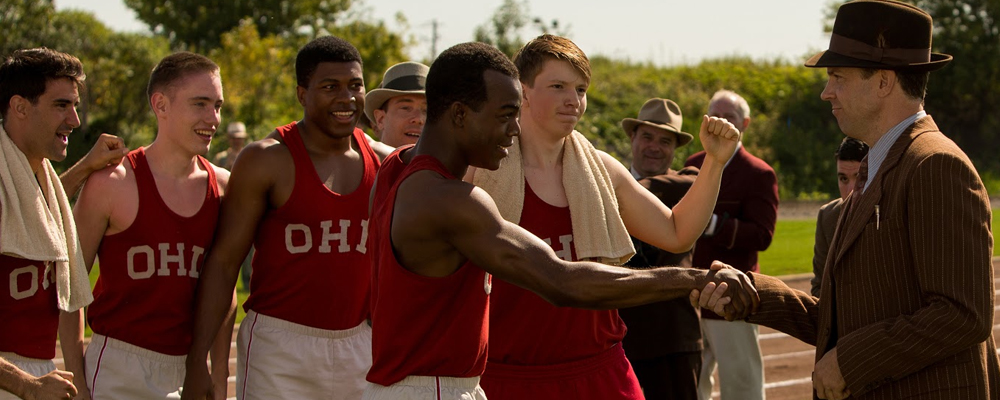
Owens is introduced at age 20 right before he heads to Ohio State University on a track scholarship. In Cleveland, he leaves behind not only his supportive family but also his fiancée, hairdresser Ruth (Shanice Banton), and their baby daughter Gloria. Once in Columbus, OH, he meets Coach Larry Snyder (Jason Sudeikis), a former OSU track star himself. Having missed his own shot at the Olympics in 1924, Larry pushes Jesse to go for the gold. He demands that he make track number one ahead of his studies and any ladies in his life. Friction develops between the two after Jesse takes a part-time job at a gas station in order to send money home to Ruth and misses a few practices. Once Larry learns of his situation he finds Jesse another source of income allowing him to really focus on track.
Not everyone is as supportive as Larry. Other coaches look down on Jesse because of his race and white student-athletes are not happy about sharing a locker room with Jesse and his friend and teammate Dave (Eli Goree). This atmosphere allows Jesse to form a kinship with one of his biggest rivals, Temple University track star Eulace Peacock (Shamier Anderson).
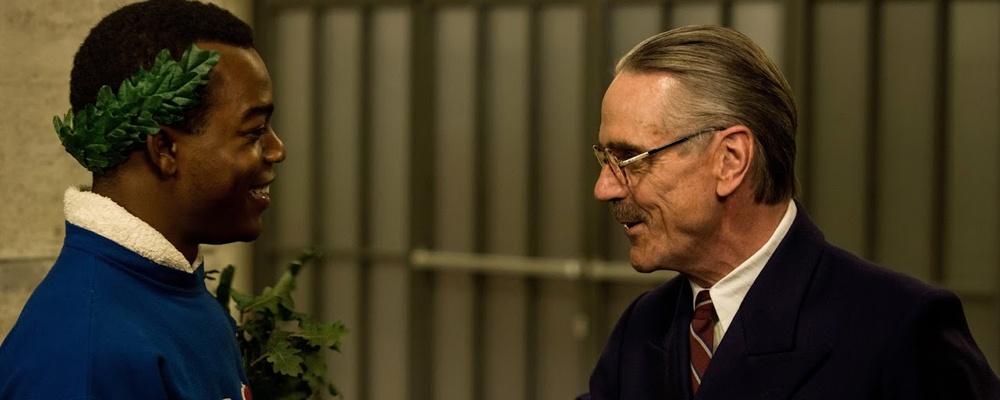
While Owens prepares for Olympic glory in Ohio, a struggle takes place amongst the members of the American Olympic committee. Millionaire industrialist Avery Brundage (Jeremy Irons), who travels to Germany and receives assurance that the Berlin games would be open to all, argues in favor of the United States’ participation while committee president Jeremiah Mahoney (William Hurt) is skeptical of the rising Hitler regime. In the end, Avery prevails and the committee votes against a boycott.
The pressure in now on Jesse. Although initially thrilled to earn a spot on the American team, Owens becomes conflicted when the NAACP asks him not to participate in order to stand in solidarity with those oppressed in Germany and also his fellow African-Americans who are still being oppressed by their American government. Director Stephen Hopkins does an excellent job showing Jesse’s struggle as he is pulled between African-American community leaders and Larry who is unable to comprehend what his protégé goes through as a black man.
“Race” does its best to find the balance between being an inspiring sports drama and a political film as the tone changes and the music becomes foreboding once Jesse, Larry and Avery cross the ocean. Hitler makes himself scarce when Jesse is around, snubbing him when he attempts to shake his hand and take a photo; a blessing in hindsight. With Hitler not around, the film’s villain is his crony Joseph Goebbels (Barnaby Metschurat), the German propaganda minister who goes back on his word when he blackmails Avery into pulling two Jewish-American runners from an event.
“Game of Thrones” villain Carice van Houten is convincing as Leni Riefenstahl, a Nazi propaganda filmmaker who goes between Avery and Goebbels. A polarizing figure in history, she was hired by Hitler to film the Olympics in order to show off the supposedly superior German athletes to the world but becomes memorized by Jesse. She shows signs of rebelling when she goes behind the government’s back and films Jesse in secret. A fascinating figure, however, the film doesn’t dig as deep as it could when it comes to Leni and her motives.
Another interesting character is Carl “Luz” Long (David Kross), Jesse’s German rival who becomes his friend. In one eerie scene, he confides in Jesse about his being set up against his will to be an early participant in what came to be known as Lebensborn, a Nazi program that aimed to raise the birth rate of Aryan children.
As for Owens, he is portrayed as a hero but also as a flawed figure. While in college, he enjoys a fling with the vivacious Quincella (Chantel Riley) causing great pain to Ruth when she sees a photograph of them together in the newspaper.
Overall, “Race” is an inspiring film that is more complex than your average sports drama and although there is some missed opportunity to dig deeper into certain characters, which is often the case in large ensemble films, the film is enjoyable and viewers will learn a great deal. History buffs will leave the theater wanting to do some research on their own.
“Race” opens nationwide Feb. 19.